Design Driven Technology Innovation in Applied Contexts
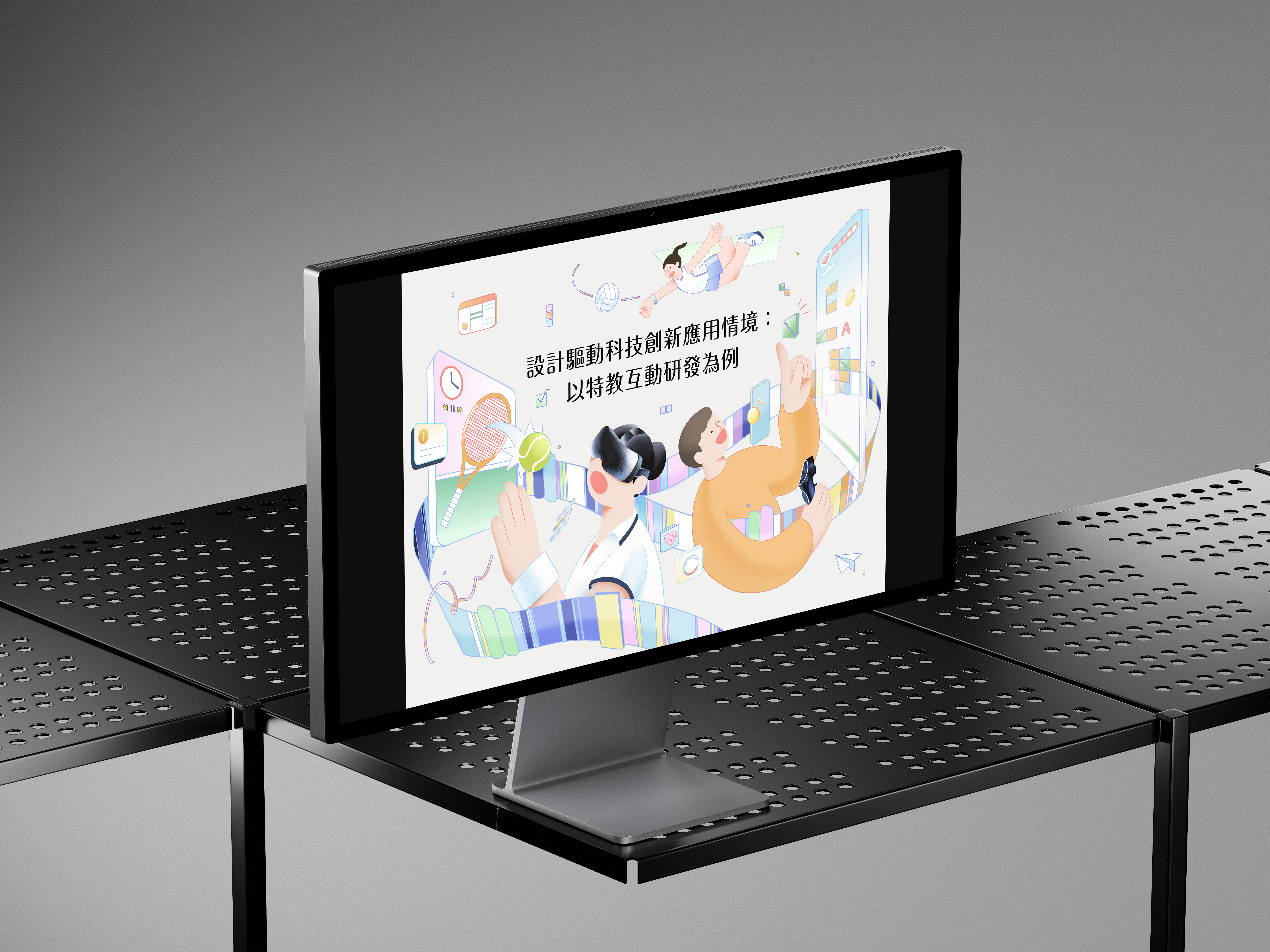
設計驅動科技創新應用情境:以特教互動研發為例
CL.—Taiwan Design Research Institute
AD.—Yu-Shu Chien
C.—Taiwan Design Research Institute
I.—Ci-En Huang
D.—Ci-En Huang
設計驅動科技創新應用情境:以特教互動研發為例
CL.—Taiwan Design Research Institute
AD.—Yu-Shu Chien
C.—Taiwan Design Research Institute
I.—Ci-En Huang
D.—Ci-En Huang
As educational settings rapidly adopt emerging technologies, social inclusion and personalized learning have become major priorities in global education reform, reshaping the challenges faced by special education. Traditional compensatory approaches centered on assistive devices and adapted teaching materials are increasingly insufficient to address the complex needs of diverse learners across cognitive, emotional, social, and sensory dimensions. Technology is no longer merely an auxiliary tool; it has become a key medium for sustaining learning motivation, supporting emotional regulation, and enabling interpersonal interaction. In parallel, “design” has moved beyond interface and aesthetics to become a core method for understanding needs, constructing contexts, translating technology, and negotiating values.
Driven by design and grounded in interactive scenarios within special education, this study seeks to develop a human-centered innovation methodology for educational technology, and proposes implementable system architectures alongside prototype demonstrations. Drawing on international trends, the study highlights a shift in special education technology toward context-driven deployment, sensor-based interaction, and AI-enabled support. Yet for technology to deliver meaningful impact, it must be rooted in a deep understanding of classroom realities and learner contexts, and be able to translate educational psychology, behavioral observation, and social participation needs into a designable and verifiable technological language.
Accordingly, the study adopts a design-driven research approach. Through interdisciplinary collaboration and long-term field immersion, it integrates on-site observation, teacher and student interviews, prototyping, and iterative feedback to progressively uncover the motivational structures and emotional needs underlying students’ learning behaviors. Beyond improving usability and learning outcomes, the research focuses on how “interaction” shapes self-efficacy, learning willingness, and social relationships establishing this as the primary foundation for technological intervention. Throughout design and validation, the study emphasizes in-situ experience quality and behavioral responses, incorporating strategies such as sensory feedback, gamified interaction, and embodied participation to enhance engagement and sustain learning over time.
hrough co-design and field-based collaboration with teachers, the study converges on an operable and iterative interactive system architecture that enables technology to precisely support individualized needs, integrate smoothly into teaching workflows, and improve teachers’ operational efficiency. The findings confirm the pivotal role of design in cross-domain collaboration, need translation, and contextual innovation, and further suggest that when technology shifts from “compensating for deficits” to “activating potential,” it can more fully unlock education’s social value advancing special education toward more inclusive and sustainable development.
隨著科技快速進入教育現場,社會共融與個別化學習已成為全球教育改革的重要趨勢,特殊教育所面臨的挑戰亦隨之轉變。傳統以輔具與教材調整為主的補償式模式,逐漸難以回應多元學習者在認知、情緒、社交與感官等層面的複雜需求。科技不再僅是輔助工具,而是承載學習動機、情緒調節與人際互動的關鍵媒介;同時,「設計」也超越介面與美學的範疇,成為洞察需求、建構情境、轉譯技術與協商價值的核心方法。
本研究以設計為驅動、以特殊教育互動情境為起點,嘗試建構一套以人為本的教育科技創新方法論,並提出可落地的系統架構與原型示範。研究從國際發展趨勢出發,指出特殊教育科技正朝向場域導向、感知互動與 AI 輔助的方向演進;然而科技要能真正發揮價值,關鍵在於能否深入理解教育現場與學習者脈絡,並將教育心理、行為觀察與社會參與等需求轉化為可設計、可驗證的技術語言。
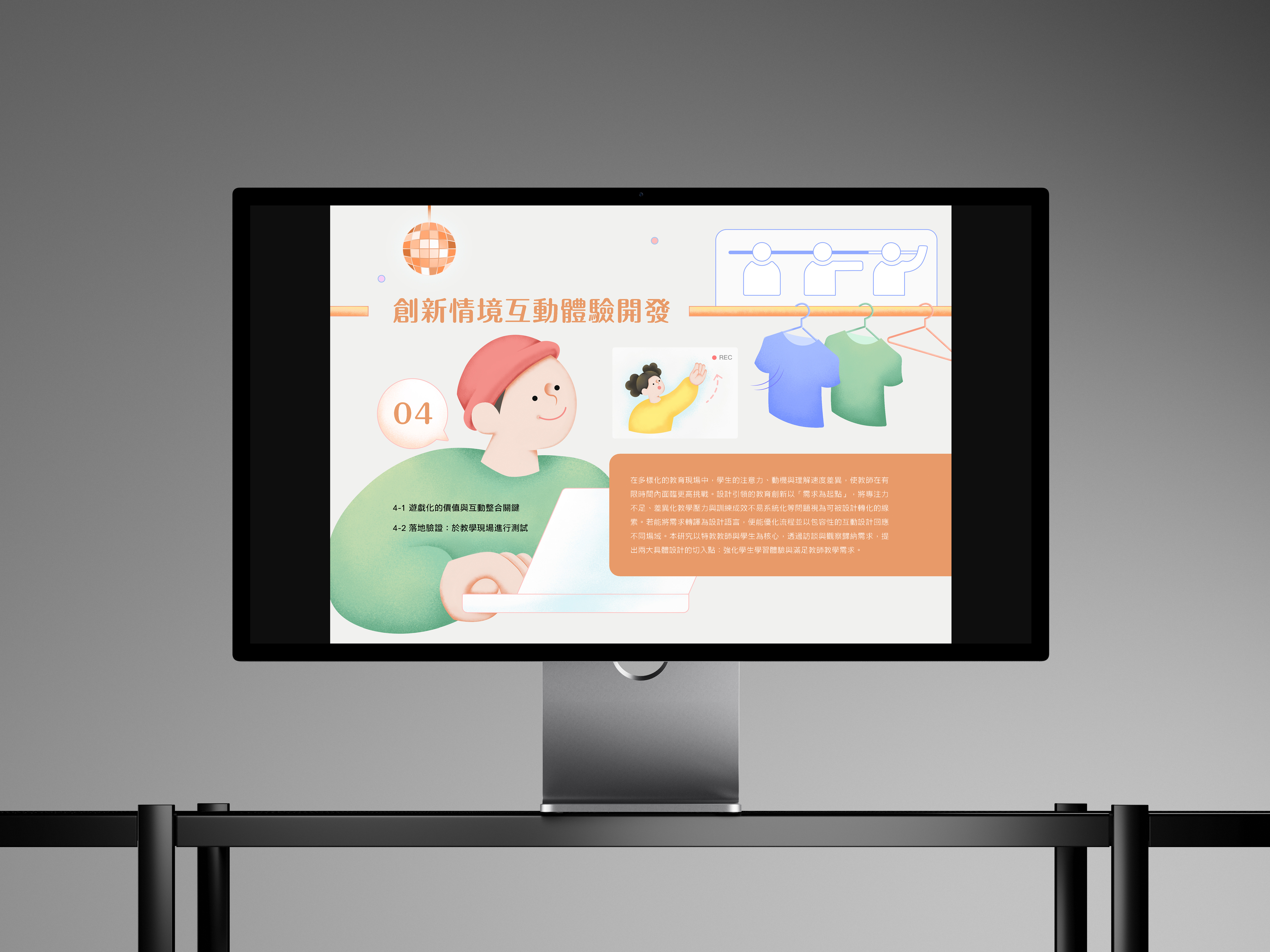
因此,本研究採用設計驅動研究方法,透過跨學科合作與長期田野浸潤,結合實地觀察、師生訪談、原型測試與動態回饋等策略,逐步挖掘特殊學生行為背後的動機結構與情感需求。研究不僅著眼於操作性與學習成效,更關注互動如何形塑自我效能、學習意願與社會關係,作為技術介入的核心出發點。在設計與驗證過程中,研究聚焦於情境中的體驗品質與行為反應,導入感知回饋、遊戲化互動與身體參與等策略,以提升學習歷程的吸引力與持續性。
透過與教師共同設計及場域協作,研究逐步收斂出一套可操作、可迭代的互動系統架構,使科技得以精準支援個別化需求、順利融入教學流程,並提升教師操作效率。研究成果驗證了設計在跨域協同、需求轉譯與情境創新中的關鍵角色,亦顯示當科技能從「補足缺陷」轉向「激發潛能」,將更有機會釋放教育的社會價值,推動特殊教育朝向更具包容性與可持續的發展。
Driven by design and grounded in interactive scenarios within special education, this study seeks to develop a human-centered innovation methodology for educational technology, and proposes implementable system architectures alongside prototype demonstrations. Drawing on international trends, the study highlights a shift in special education technology toward context-driven deployment, sensor-based interaction, and AI-enabled support. Yet for technology to deliver meaningful impact, it must be rooted in a deep understanding of classroom realities and learner contexts, and be able to translate educational psychology, behavioral observation, and social participation needs into a designable and verifiable technological language.
Accordingly, the study adopts a design-driven research approach. Through interdisciplinary collaboration and long-term field immersion, it integrates on-site observation, teacher and student interviews, prototyping, and iterative feedback to progressively uncover the motivational structures and emotional needs underlying students’ learning behaviors. Beyond improving usability and learning outcomes, the research focuses on how “interaction” shapes self-efficacy, learning willingness, and social relationships establishing this as the primary foundation for technological intervention. Throughout design and validation, the study emphasizes in-situ experience quality and behavioral responses, incorporating strategies such as sensory feedback, gamified interaction, and embodied participation to enhance engagement and sustain learning over time.
hrough co-design and field-based collaboration with teachers, the study converges on an operable and iterative interactive system architecture that enables technology to precisely support individualized needs, integrate smoothly into teaching workflows, and improve teachers’ operational efficiency. The findings confirm the pivotal role of design in cross-domain collaboration, need translation, and contextual innovation, and further suggest that when technology shifts from “compensating for deficits” to “activating potential,” it can more fully unlock education’s social value advancing special education toward more inclusive and sustainable development.
隨著科技快速進入教育現場,社會共融與個別化學習已成為全球教育改革的重要趨勢,特殊教育所面臨的挑戰亦隨之轉變。傳統以輔具與教材調整為主的補償式模式,逐漸難以回應多元學習者在認知、情緒、社交與感官等層面的複雜需求。科技不再僅是輔助工具,而是承載學習動機、情緒調節與人際互動的關鍵媒介;同時,「設計」也超越介面與美學的範疇,成為洞察需求、建構情境、轉譯技術與協商價值的核心方法。
本研究以設計為驅動、以特殊教育互動情境為起點,嘗試建構一套以人為本的教育科技創新方法論,並提出可落地的系統架構與原型示範。研究從國際發展趨勢出發,指出特殊教育科技正朝向場域導向、感知互動與 AI 輔助的方向演進;然而科技要能真正發揮價值,關鍵在於能否深入理解教育現場與學習者脈絡,並將教育心理、行為觀察與社會參與等需求轉化為可設計、可驗證的技術語言。
因此,本研究採用設計驅動研究方法,透過跨學科合作與長期田野浸潤,結合實地觀察、師生訪談、原型測試與動態回饋等策略,逐步挖掘特殊學生行為背後的動機結構與情感需求。研究不僅著眼於操作性與學習成效,更關注互動如何形塑自我效能、學習意願與社會關係,作為技術介入的核心出發點。在設計與驗證過程中,研究聚焦於情境中的體驗品質與行為反應,導入感知回饋、遊戲化互動與身體參與等策略,以提升學習歷程的吸引力與持續性。
透過與教師共同設計及場域協作,研究逐步收斂出一套可操作、可迭代的互動系統架構,使科技得以精準支援個別化需求、順利融入教學流程,並提升教師操作效率。研究成果驗證了設計在跨域協同、需求轉譯與情境創新中的關鍵角色,亦顯示當科技能從「補足缺陷」轉向「激發潛能」,將更有機會釋放教育的社會價值,推動特殊教育朝向更具包容性與可持續的發展。